*The information provided in this blog is general in nature and should not be considered medical advice. Individual conditions vary, and proper evaluation is important. To receive accurate diagnosis and treatment, we encourage you to book an appointment with our experienced medical team.
Is Shockwave Therapy Painful for Men with Severe Erectile Dysfunction?
Short answer: No. For most men, shockwave therapy stands out as mildly uncomfortable, rather than painful. There are no cuts involved, and no anesthesia is required. During the procedure, some feel light tapping and tingling sensations. Reports of some pain after the treatment are not uncommon, although severe cases of ED may require some adjustments to the treatment schedule.
Men considering this treatment can read this article to learn what happens during the procedure and what to keep in mind before scheduling their appointment.
Table of Contents
How Shockwave Therapy Works?
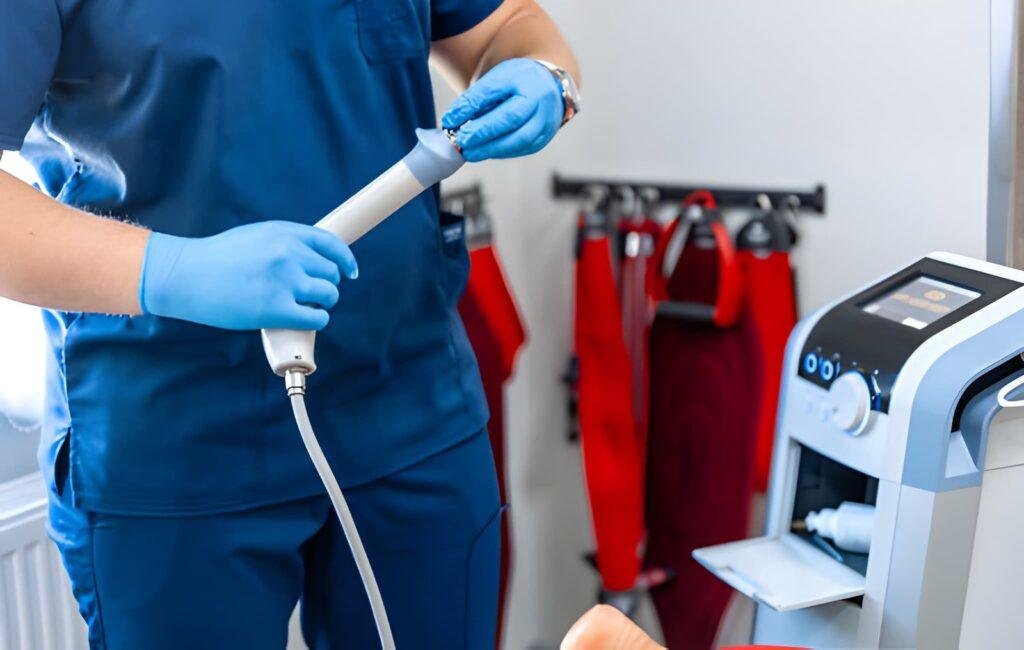
Shockwave therapy for ED (also known as Li-ESWT or low-intensity extracorporeal shockwave therapy) is a form of treatment that uses a portable device to generate and transmit low-energy pulses through the skin into the penis. These pulses stimulate natural processes in the body, leading to the appearance of new blood vessels and improved blood flow to help with ED, especially in men aged over 50 or with conditions such as diabetes or hypertension.
The procedure usually lasts for about 15-20 minutes. You need to lie comfortably. A thin layer of the gel is spread on your penis, and the device will be used on several spots. You don’t have to worry about any incisions or sedation, and you can drive back home right after the procedure. Usually, this therapy includes 6-12 treatments over several weeks with possible maintenance rounds afterward. It should be noted that shockwave therapy for ED is different from the shockwave technology that is available for treating tendon injuries or crushing urinary stones. This procedure is performed with relatively low energy, which is the key point when talking about pain associated with the therapy.
What Is The Sensation Like?
Most men are likely to identify three sensations in their order of frequency:
- An unusual tapping or pulsating sensation that resembles a light drumming technique. Most men can adapt to this sensation within the first couple of minutes of the procedure.
- A slight tingling or some feeling of warmth in the treated area. This sensation usually vanishes quickly after the device leaves a particular spot.
- On rare occasions, there may appear a small discomfort, like a bruise, for a day or two after the procedure, but this happens more often to men with thinner tissues or in areas where the procedure took more time.
Generally speaking, you shouldn’t experience sharp, burning pain or any discomfort that will stop you from continuing the session. Clinics equipped with the appropriate devices should be able to change the energy settings if the patient feels uncomfortable.
Does ED severity affect the Pain Level?
Not in a literal sense; this is a very common misunderstanding. The pain associated with shockwave therapy results from the mechanical action of the device. In fact, a person experiencing mild ED and an individual with severe ED should experience the same sensations during the treatment, although the treatment plan will differ between patients. Individuals with severe ED will require a greater number of sessions and possibly oral medications as well, such as tadalafil, to achieve a positive result. A study in the International Journal of Impotence Research published in 2025 stated that most clinical trials have combined patients with varying degrees of ED. Therefore, it is difficult to decide what effects a person with severe ED might expect, since there might exist combinations of therapies that are necessary to achieve the required outcomes for patients suffering from varying degrees of impotence.
The Takeaway: Expect a fairly similar process in session, no matter where you are on the ED spectrum, but have a frank discussion with your healthcare provider about how many sessions you can expect and which combination of treatments makes sense for your situation.
Must Read : Why Erectile Dysfunction Is Rising in Men Under 40?
What the research tells us about safety and discomfort
There is some supporting literature that states that Li-ESWT is safe. A 2025 Cochrane review explored low-intensity shock wave treatment and approached it as a new technique delivering sound waves to the penis in an attempt to increase blood flow, without finding pain as a major side effect of the treatment.
Bigger studies agree too. A meta-analysis of 12 studies of 882 men found an improvement in erectile dysfunction sufficient to achieve erection and penetration. None of these reviews described pain as a reason for patients to discontinue the treatment.
It is not discomfort during the treatment that drives men to stop the treatment, nor is it pain.
What should men know before they take the treatment?
A Few Canadian-Specific Things to Be aware of before you visit:
- Coverage – Shockwave therapy is generally not covered by your province’s public health insurance plan (OHIP, MSP, AHCIP, etc.) – it is primarily regarded as an elective cosmetic or lifestyle choice, not a medically essential treatment. Depending on the plan, your secondary private and/or extended benefits might provide some coverage.
- How it works – A full treatment course at a private institution in Canada is not usually presented as a set package price, but as per-session charges; the total cost for the recommended protocol can accumulate and become significant. Always inquire about the total cost, not just the cost per session.
- Device, certification and regulation – Health Canada does not regulate shockwave therapy as a treatment for ED with the same rigor it does for prescription medication. Hence, the quality of equipment and expertise varies between establishments. When discussing with an institution, ask whether the equipment is Health Canada-licensed for ED treatment.
- Inquire as to who will perform – your treatment and whether they have had specialized training, as the skill sets can differ between facilities.
- Consult a doctor first – If possible, have a conversation with your healthcare professional, preferably a urologist or
- another physician trained in men’s sexual health – This can screen for any heart issues.
Who May Not Be a Good Candidate for Shockwave Therapy?
There are a few instances in which a man should speak with his doctor before pursuing shockwave therapy:
- Have a bleeding disorder or are using several blood-thinning drugs
- Active infection in the treated area
- Priapism or another unresolved penile disease or disorder
- Have not had an evaluation to identify the underlying cause of the ED
Where to Go From Here
Pain shouldn’t deter you from pursuing ED treatment. What you really need to address is the root cause of your erectile dysfunction. If you’re in the Cambridge, Kitchener, or Waterloo area, Urogen ED Cambridge specializes in treating the underlying factor of your ED, not just its symptoms. A discussion with our consultants can help you identify the best options for you, all without pressure to make immediate decisions.
FAQs
1. Does shockwave therapy hurt more for severe erectile dysfunction than for mild cases?
No. The physical sensation is approximately the same for all ED patients who receive the therapy. What varies is the number of treatment sessions and, in severe cases, other interventions, such as the administration of daily oral medication.
2. Do I need anesthesia or numbing cream for shockwave therapy?
No. Because the therapy is entirely non-invasive, it does not require any form of anesthesia, sedation or numbing cream. Almost all men find the therapy sessions tolerable, without any pain management.
3. How many sessions will a man with severe ED typically need?
While individual protocols may differ between clinics, most providers will offer six to twelve treatment sessions over several weeks. Most severe ED patients often require an extended course of therapy, and potentially will need further “maintenance” sessions thereafter. Your provider will outline your individual therapy protocol before treatment.
4. Does Canadian health insurance cover shockwave therapy?
No, not generally. The therapy is typically considered an elective treatment and isn’t covered by provincial healthcare plans such as OHIP or MSP. Some extended private insurance plans will provide partial coverage for Shockwave Therapy, so it’s advisable to review your policy.
5. Can shockwave therapy replace medication like Viagra or Cialis for severe ED?
The research for severe ED hasn’t been at the same level as for milder forms, and typically they research the combination of shockwave therapy with the daily tadalafil (e. G., Cialis).
Medical Disclaimer: This blog is provided for informational and educational purposes only and should not be considered medical advice, diagnosis, or treatment recommendations. The content represents general information about benign prostatic hyperplasia and related conditions based on medical knowledge and clinical experience, but every patient’s situation is unique. Prostate conditions can be serious and require proper medical evaluation and treatment. Do not use this information to self-diagnose or self-treat.
Always consult with a qualified healthcare provider, preferably a urologist, for proper evaluation, diagnosis, and treatment recommendations specific to your individual health situation. Treatment options, risks, benefits, and outcomes vary significantly between patients based on age, overall health, prostate size, symptom severity, and other medical conditions.
Medications mentioned carry specific risks and side effects that must be discussed with your doctor. Delaying proper medical care for prostate conditions can lead to serious complications, including kidney damage, bladder damage, urinary retention, and other health problems. If you experience inability to urinate, blood in urine, severe pain, or other urgent symptoms, seek immediate medical attention. This content does not create a doctor-patient relationship.