*The information provided in this blog is general in nature and should not be considered medical advice. Individual conditions vary, and proper evaluation is important. To receive accurate diagnosis and treatment, we encourage you to book an appointment with our experienced medical team.
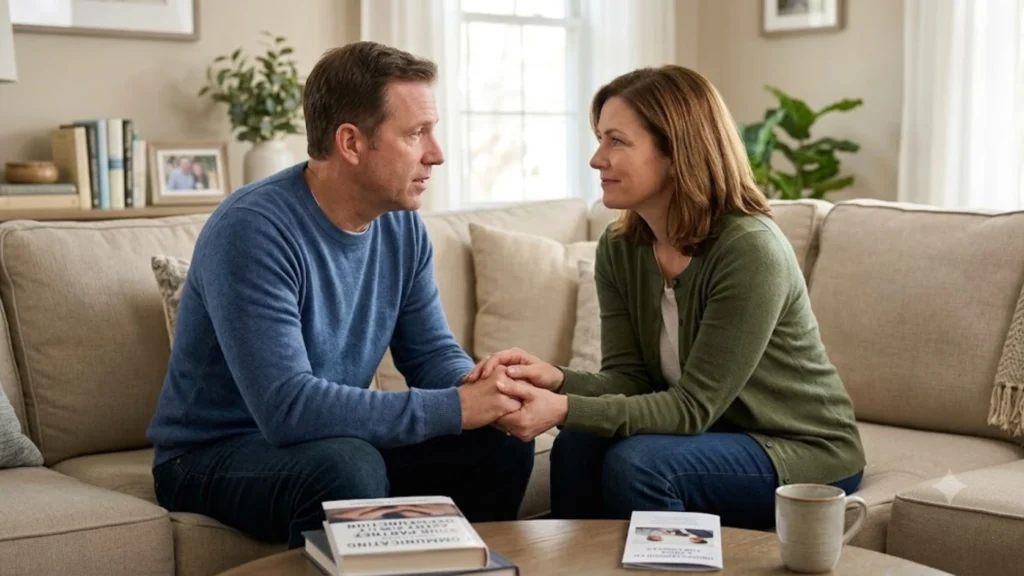
How to Talk About Erectile Dysfunction with Your Partner
Erectile dysfunction (ED) can be a complex topic to discuss even with trusted ones. For men in general, an erection is closely tied to one’s confidence, closeness, attraction, and overall sense of being a partner. When things don’t go as expected in the bedroom, men may feel embarrassed and afraid of what their partner will think.
Some men may prefer avoiding intimacy simply for fear that it would happen again. It may make them think their partner is losing interest in them. Or they may not know how to voice their feelings about the issue without causing discomfort to both parties.
So, staying silent can sometimes do more harm than good.
Being able to talk about Erectile Dysfunction makes it much easier for both partners to understand each other and to enjoy intimacy without blaming or pressuring.
Table of Contents
Why Discussing ED Can Be Challenging
ED relates not just to the physical aspect, but also to how it affects a man emotionally and how he approaches his relationships.
You may be thinking:
- “Will I have to deal with this again?”
- “Is my partner going to think I am not attracted to them anymore?”
- “Am I going to disappoint them?”
- “Is it something they are going to talk to someone else about?”
- “Will this affect our relationship?”
- “Why are things so complicated?”
Thus, you may want to avoid this topic.
On the other hand, your partner may have a bunch of questions as well. They may wonder whether you are still mad at them, or if they did anything wrong. Lack of communication leads both partners to make assumptions.
Therefore, understanding how to talk about ED with your partner has little to do with finding the right words and much to do with having an open conversation.
Start the Conversation Away from the Bedroom
One of the easiest ways to make conversations easier is to choose the right time.
Trying to initiate the conversation about ED right after an unsuccessful sexual encounter might be awkward, because emotions tend to run high. Hence, it’s better to find a time when you are both calm and have privacy.
You can do it at home on a quiet evening, during a walk or at any occasion when you don’t feel rushed.
You don’t have to come up with a lengthy speech; a simple conversation starter may be enough.
For example, you can say that there is something that you have been uncomfortable discussing with them: “Sometimes I don’t get an erection, and I want you to know that this has nothing to do with how I feel about you.”
Be upfront without feeling like you have to give a ton of details.
You don’t need to have everything figured out before you start your conversation.
There is nothing wrong with saying that you don’t know what is going on.
You can say things such as:
- “I’m not sure about the reason behind it.”
- “I am noticing it more nowadays.”
- “Since this has been bothering me for a while, I wanted to talk to you about it.”
- “I don’t want you to think that it indicates a lack of attraction towards you.”
- “I still want to be intimate with you.”
Remember, you do not have to come to any conclusions.
All you have to do is share your feelings and impressions regarding the matter with your partner.
This will help to avoid misunderstandings.
Erectile dysfunction is not an indicator that desire is gone.
It is important to understand that just because a man is experiencing difficulties with getting an erection does not mean he does not find his partner attractive. There may be various reasons that affect sexual performance, leading to difficulties getting an erection, and often men are under the impression that the more they worry about their erectile problems, the more pressure they will experience during sex.
If your partner is forced to wonder if there is still attraction on your side, make sure to make this clear to him:
“I still find you attractive. This is not your fault.”
These simple words can help overcome many doubts.
More often than not, stating your attraction isn’t enough. Your partner needs assurance that everything is all right a couple of times.
Discuss Your Feelings
Discussing the issue of erectile dysfunction in a relationship becomes easier when you also talk about your feelings in addition to what is physically happening.
You may feel embarrassed or frustrated. You may feel as if you are disappointing your partner.
Explain this to them.
For example, saying “I’m frustrated that I can’t be close to you” means much more than saying “I can’t perform.”
This way, your partner understands you still care about intimacy and the relationship.
You can also explain your wishes and needs to your partner. Maybe you need reassurance from your partner. You may want to avoid discussing it right after sexual relations or ask your partner for patience until you get your thoughts clear.
While there is no definite approach to communicating about the subject, it is essential to share your feelings with your partner.
Don’t Make It a Competition
One of the easiest traps to fall into when dealing with ED in a relationship is the pressure that surrounds sex.
After one disappointing encounter, you might begin to think
‘Will it happen again tonight?’
Then during the act, you might be more concerned with whether or not you are going to get an erection than you are about enjoying your partner’s company.
Your partner might even notice the change.
Instead of putting pressure on yourself to prove that you can still satisfy your partner in bed, try taking some of that pressure off.
Eliminating the competition helps both partners feel more at ease.
Giving Your Partner a Chance to Speak Up
The dialogue doesn’t always have to go one way.
Your partner may have things they want to say but haven’t because they don’t want to hurt your feelings or don’t know how to bring it up.
Ask them.
Try asking things like:
- “How do you feel about this?”
- “Are you worried about anything?”
- “Do you think it is something you’ve done?”
- “How do you think it can be easier for us?”
Listen without becoming defensive.
Your partner’s queries don’t mean they’re judging you.
They could just be having trouble understanding what’s going on.
Do not resort to a blame game.
ED can become a relationship problem if one or both of you start blaming someone else.
You could start blaming yourself.
Your partner could blame themselves.
One of you may start wondering whether something has gone wrong in your relationship.
Try to think of it as a problem you have together, rather than something that’s been done to you by someone else.
Instead of saying:
“You don’t understand what I’m going through.”
Try saying:
“I know this has been difficult for both of us. I would really like us to discuss this without putting pressure on either of us.”
That small change in phrasing could make all the difference to how the conversation goes.
What If You Are Afraid That Your Partner Will Reject You?
This is the thought that many men will automatically have when trying to think of how to talk to your partner about
Erectile Dysfunction.
You may feel that your partner will not love you the same way once they know.
Hiding the problem does not always make it disappear.
Your partner is likely thinking about what could be causing your issues.
You risk causing even more frustration if you don’t address it.
Being vulnerable with them will be uncomfortable, but it could allow you to grow much closer as a couple.
You don’t have to be perfectly prepared when talking to your partner about your concerns.
Unfortunately, you need to be brutally honest.
And What Happens If Your Partner Doesn’t Know How to React?
Some people don’t know how to react when someone they care about shares something vulnerable.
Your partner may go very quiet at first. They might start asking all sorts of questions. They could be confused about how to react.
Try not to jump to conclusions about how their initial reaction really reflects their feelings toward you.
Take some time for yourself.
You can come back to the conversation and say:
“I have been reflecting on our discussion. Is there anything you would like to ask me?”
Sometimes the initial discussion only helps pave the way for other discussions.
Once ED Starts to Impact Your Relationship
If ED starts to become a consistent source of stress, then you will need to start thinking about its impact on your relationship rather than assuming that everything is normal.
Some things that may occur include:
- You stop making advances towards sexual activity.
- Your partner stops making advances because they are worried about putting pressure on you.
- You become less affectionate with one another.
- You start fighting more.
- You stop talking about sex entirely.
- You grow increasingly distant from one another.
This doesn’t necessarily mean there is a problem in the relationship itself. It could just mean that ED is becoming a problem for both of you to handle.
An open discussion can help ensure it doesn’t cause a rift in your relationship.
You Don’t Need to Get the Talk Exactly Right
There isn’t any right way to talk to your partner about ED.
You may find yourself stumbling over your words. You may feel embarrassed. Or you may even decide to turn back mid-sentence.
It is all okay.
The important thing is opening the door.
Closing Thoughts
It can be incredibly challenging to know how to talk about ED when you’re already in a vulnerable state. However, you don’t have to remain silent or act like things are okay.
Erectile dysfunction does not define you as a man, nor does it dictate the quality of your relationship. This is a delicate topic, but you can still address it with honesty, patience, and compassion.
If you’ve been struggling with erections and would rather speak with someone one-on-one, Urogen ED Cambridge provides a safe space for men to discuss their issues openly and discreetly. You don’t need to feel ashamed or know all the right things to say when you call us. Sometimes, simply having a private conversation is a good place to start.
Frequently asked questions
Pick a quiet, relaxed time to share with your partner how you’ve been feeling and what has been happening. Make it clear to your partner that having ED doesn’t mean you’re not attracted to them. Keep the initial conversation brief, and let your partner know they can ask questions.
In some cases, ED can cause frustration, embarrassment, less intimacy, or misunderstandings between partners. Being open with your partner may help avoid any assumptions and will help each person understand what the other is going through.
You don’t need to give up on sex completely. Removing the pressure of sexual performance and concentrating on other forms of affection and intimacy can help both you and your partner feel better.
Let them know how you really feel. Having ED doesn’t always mean that attraction has decreased. Reassurance and honest communication can go a long way in helping your partner see it’s not a sign of disinterest.
If you don’t want to discuss ED with family or friends, you can get in touch with Urogen ED Cambridge for a private appointment. This gives men a chance to speak freely and confidentially about their issues.
Medical Disclaimer: This blog is provided for informational and educational purposes only and should not be considered medical advice, diagnosis, or treatment recommendations. The content represents general information about benign prostatic hyperplasia and related conditions based on medical knowledge and clinical experience, but every patient’s situation is unique. Prostate conditions can be serious and require proper medical evaluation and treatment. Do not use this information to self-diagnose or self-treat.
Always consult with a qualified healthcare provider, preferably a urologist, for proper evaluation, diagnosis, and treatment recommendations specific to your individual health situation. Treatment options, risks, benefits, and outcomes vary significantly between patients based on age, overall health, prostate size, symptom severity, and other medical conditions.
Medications mentioned carry specific risks and side effects that must be discussed with your doctor. Delaying proper medical care for prostate conditions can lead to serious complications, including kidney damage, bladder damage, urinary retention, and other health problems. If you experience inability to urinate, blood in urine, severe pain, or other urgent symptoms, seek immediate medical attention. This content does not create a doctor-patient relationship.