*The information provided in this blog is general in nature and should not be considered medical advice. Individual conditions vary, and proper evaluation is important. To receive accurate diagnosis and treatment, we encourage you to book an appointment with our experienced medical team.
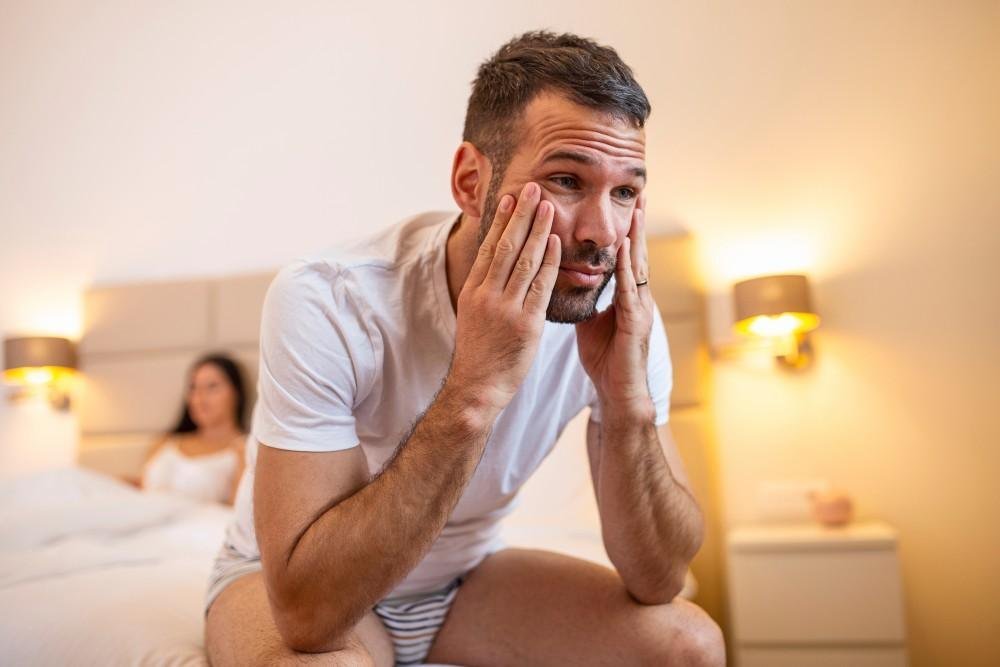
Can Stress and Anxiety Cause Erectile Dysfunction: The Mind-Body Connection Men Overlook
1 in 10 men suffer from anxiety in Canada, which is about 9.9% to 14.3%. The lifetime prevalence of anxiety disorder in men is about 15%. Additionally, social anxiety disorder saw an increase of a whopping 71% since 2002, making it the most common mental health challenge in the country.
Anxiety is a feeling of worry and nervousness, which reflects unease about an uncertain outcome. Erectile Dysfunction is a combined play of organic and psychological factors, which requires an integrated treatment approach. When we say psychological factors, they include anxiety and depression. Notwithstanding, ED has severe mental and emotional consequences with feelings of emasculation, humiliation and decreased self-confidence leading the pack.
Table of Contents
Key takeaways
- ED is primarily considered a pre-emptive risk factor for future CVD. Stress and anxiety only tend to worsen the conditions. Individuals suffering from ED are prone to high blood pressure, heart disease, diabetes and obesity.
- Anxiety and stress are not uncommon with ED. They are curable causes, and consequently, these mental health conditions interfere with the brain’s signals, affecting blood flow to the penis.
- Psychodynamic therapy, sex therapy, and sexual anxiety therapy with supportive alternative treatments, including yoga and meditation, can ease the stress and treat anxiety, which in turn cures erectile dysfunction.
While ageing and maintaining an erection are not related, ED does increase as age advances.
If your cause for ED is physical, then the success of the treatment depends on the nature of your physical health.
Anxiety-Induced ED
Typically, there are three types of erections:
- Reflexive – With physical stimulation
- Psychogenic – Relative to visual and mental
- Nocturnal – During sleep
A set of important bodily processes is involved in these types of erections, and any disruption to this can lead to ED. And if an individual is already experiencing ongoing ED, stress and anxiety only exacerbate the cycle, which can lead to behavioural changes.
Psychological stress inhibits blood circulation and interferes with the normal physiological arousal process responsible for erection. Erectile dysfunction caused by anxiety is induced by mental and emotional factors, unlike erectile dysfunction caused by physical conditions.
Various Types of Anxiety
With fear-based ED comes performance anxiety. This specifically develops during intimacy. Men report racing thoughts, with fear of disappointing their partner and worry about their performance. These mental barriers prevent relaxation, thus stopping the necessary blood flow to the penis.
Even outside performance contexts generalized anxiety disorder can manifest as sexual dysfunction. Men with prolonged stress and chronic anxiety experience low testosterone, which compounds into erectile difficulties. The body is constantly in fight-or-flight mode with GAD, leading to a state of worry and tension.
Anxiety is also linked to situational ED that varies by partners and circumstances. The onset is rapid, unlike gradual physical ED. Symptoms appear suddenly and may not necessarily occur across all sexual situations.
What Happens When Anxiety Triggers ED
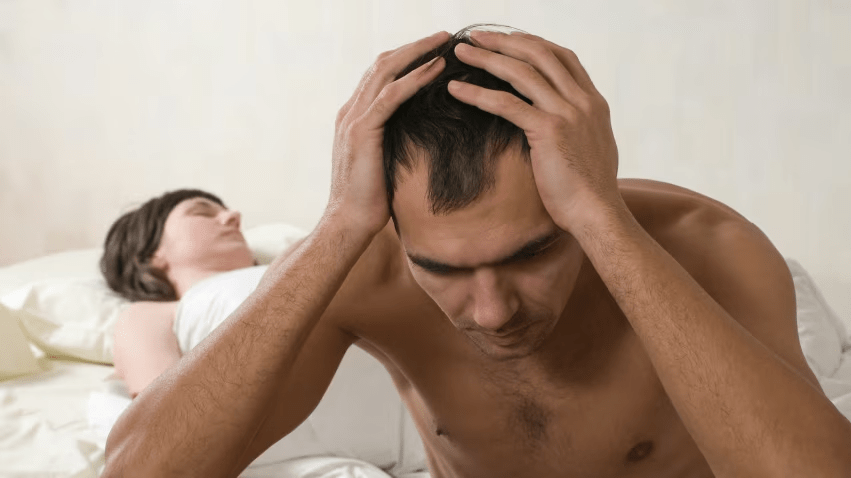
40% of young men experience performance anxiety with their first sexual encounters. This is one of the most common causes of anxiety-induced ED. The lack of experience, combined with the pressure to perform well and intense emotions, is the ideal scenario for sexual dysfunction. Concerns about sexual compatibility and impressing a partner in a new relationship can cause additional stressors.
Other scenarios include financial pressure, work stress and major distressing life changes, which can lead to reduced or no sexual function. The body is unable to engage in reproductive activities and simultaneously prepare for perceived threats. For instance, individuals who face a job loss or financial strain tend to prioritize survival over sexual desires. This leads to a temporary ED.
Body image, sexual technique and penis size are some causes of social anxiety that create mental barriers and inhibit arousal. These men focus more on concerns such as appearance and sexual abilities, and don’t relax enough to achieve an erection. They are too preoccupied with the fear of poor performance.
Past trauma with negative sexual experiences can also induce anxiety during intimacy. These are automatic anxiety reactions in sexual situations. Sexual rejection and embarrassing episodes can develop automatic anxiety responses in sexual situations.
The Physiological Process
During an anxiety episode, penile blood vessels are constricted due to the release of cortisol and adrenaline. Nitric oxide production is reduced, which is a crucial chemical messenger for erections. In response to perceived stress or threat, blood flow is redirected away from nonessential organs, such as the penis, and toward vital organs, such as the lungs and heart. This is an evolutionary protective mechanism, but it hinders sexual function.
Parasympathetic signals control sexual arousal alongside rest and digest functions. During stress, the sympathetic nervous system overrides parasympathetic signals required for erection. In an anxious situation, the sympathetic system is triggered, and since these two systems cannot operate together, erections become physiologically impossible.
Muscle tension in the pelvic floor and smooth muscle of the penis increases, and there is poor blood retention. The smooth muscle tissue should be relaxed for an erection, and within the penis, to let blood vessels trap blood and dilate. Anxiety-induced muscle tension makes it difficult to achieve firmness, even with some blood flow.
Testosterone levels deplete over time with chronic anxiety, and overall sexual drive, with erectile capacity being diminished. If an individual has persistent anxiety, they will experience low testosterone levels that lead to depression. Symptoms seem to overlap, compounding into sexual difficulties.
Indicators That Your ED Is Anxiety-Related
- Regular morning and spontaneous erections are not vascular issues, but rather suggest anxiety.
- Performance anxiety can occur in specific situations with certain partners, leading to ED.
- Stressful life events coincide with the rapid onset of ED symptoms.
- When an erection is achieved with masturbation but not with a partner, it confirms psychological factors
Treatment at UROGENED Cambridge
Urogen ED Cambridge employs expert medical professionals who help you retain control over your sexual life with natural, effective solutions. Enhance your confidence, your well-being, and relationships as we provide compassionate, result-oriented care tailored to your needs.
Our treatments are safe, proven, drug-free, non-invasive, and designed to stimulate tissue repair.
FAQs
There are several types, including performance anxiety, that can cause erectile dysfunction.
If you have had a stressful life event, or are generally worried about your performance with your partner or are trying to have a first-time sexual experience, these situations could cause anxiety leading to ED.
The blood flow to the penis is inhibited due to anxiety, leading to a sexual dysfunction.
Of course. Speak to a medical professional at UrogenED Cambridge for guidance.
We use safe, proven therapies that are natural, non-invasive and absolutely discreet. Reach out to our office for a consultation to learn more.
Medical Disclaimer: This blog is provided for informational and educational purposes only and should not be considered medical advice, diagnosis, or treatment recommendations. The content represents general information about benign prostatic hyperplasia and related conditions based on medical knowledge and clinical experience, but every patient’s situation is unique. Prostate conditions can be serious and require proper medical evaluation and treatment. Do not use this information to self-diagnose or self-treat.
Always consult with a qualified healthcare provider, preferably a urologist, for proper evaluation, diagnosis, and treatment recommendations specific to your individual health situation. Treatment options, risks, benefits, and outcomes vary significantly between patients based on age, overall health, prostate size, symptom severity, and other medical conditions.
Medications mentioned carry specific risks and side effects that must be discussed with your doctor. Delaying proper medical care for prostate conditions can lead to serious complications, including kidney damage, bladder damage, urinary retention, and other health problems. If you experience inability to urinate, blood in urine, severe pain, or other urgent symptoms, seek immediate medical attention. This content does not create a doctor-patient relationship.